Cummins to CAT Engine Swap Kit
Shop Our Categories
Truck Assembly & Conversion Parts
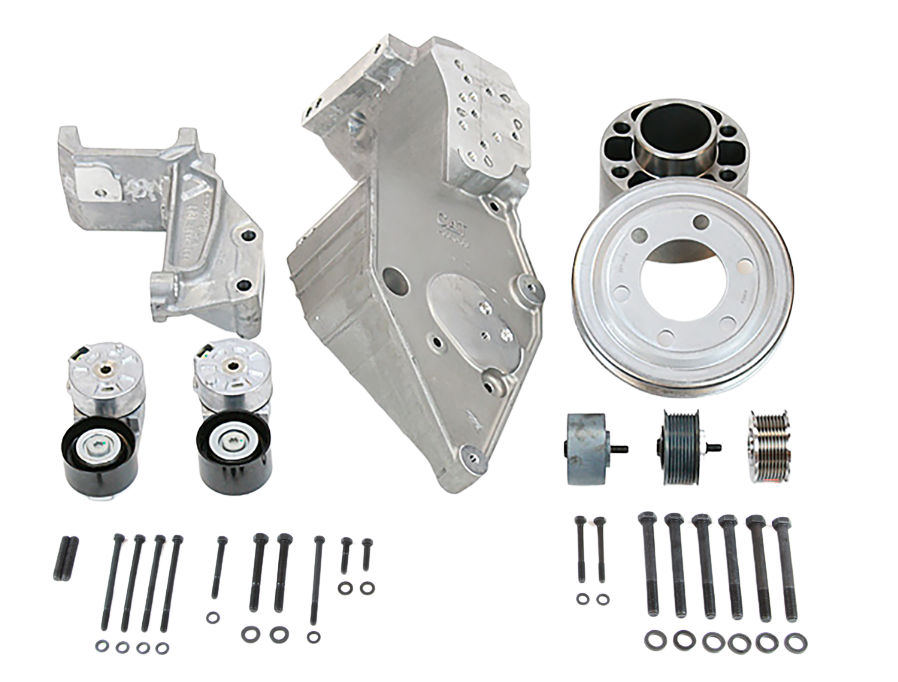
Truck Engine Parts
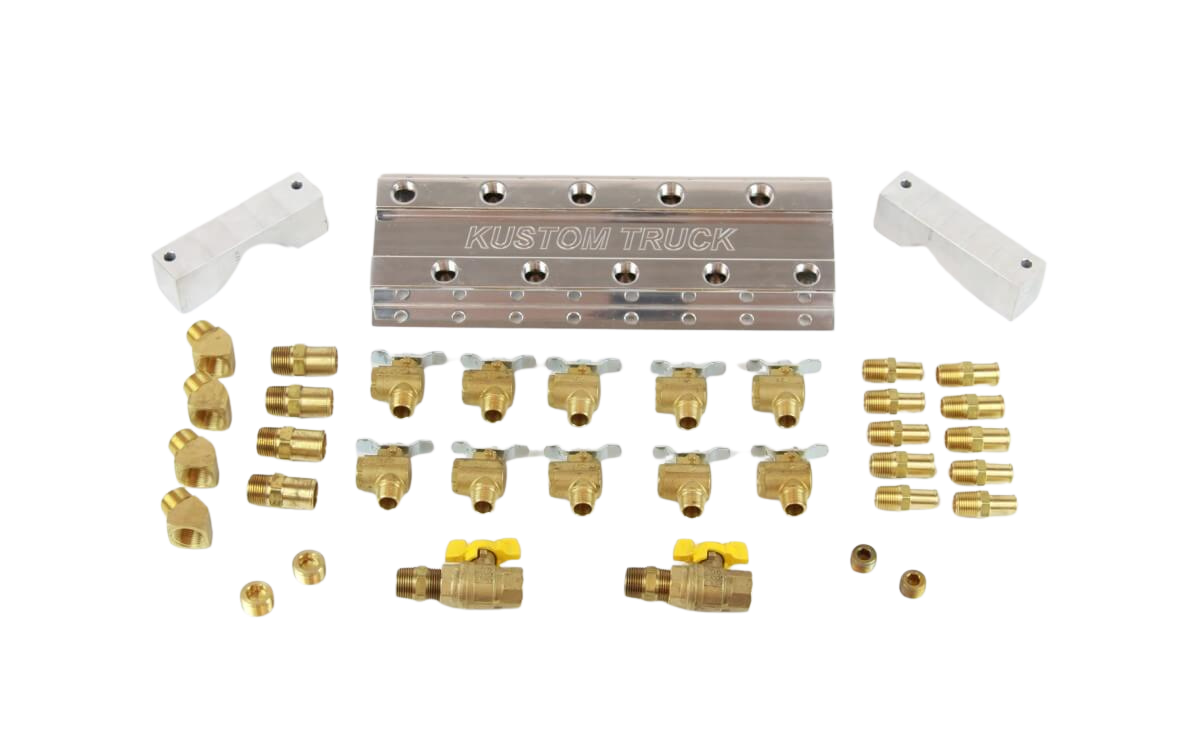
Custom Truck Parts
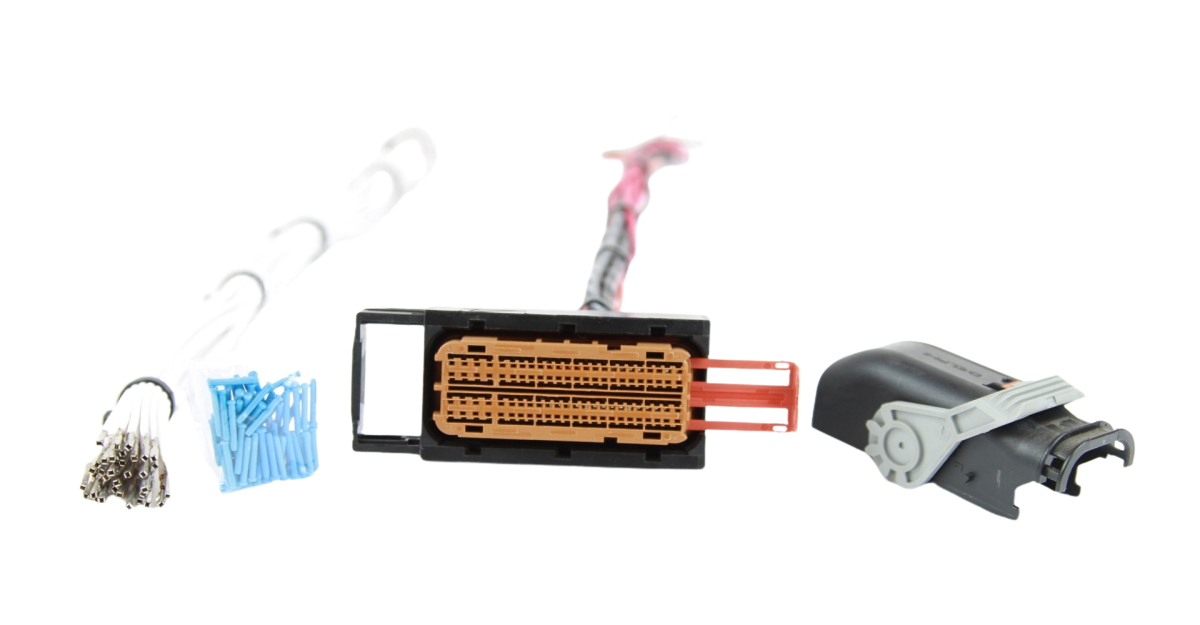
Wiring Harness Repair Kits
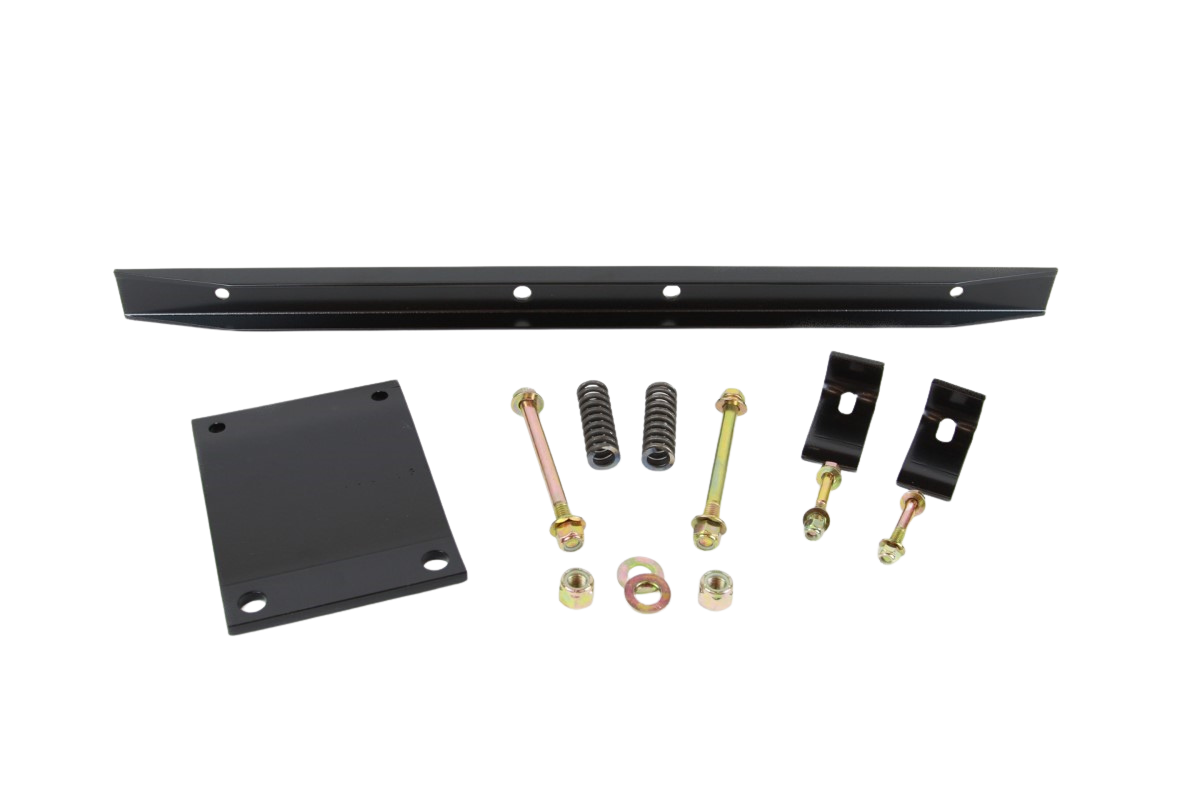
Heavy Duty Truck Transmission Parts
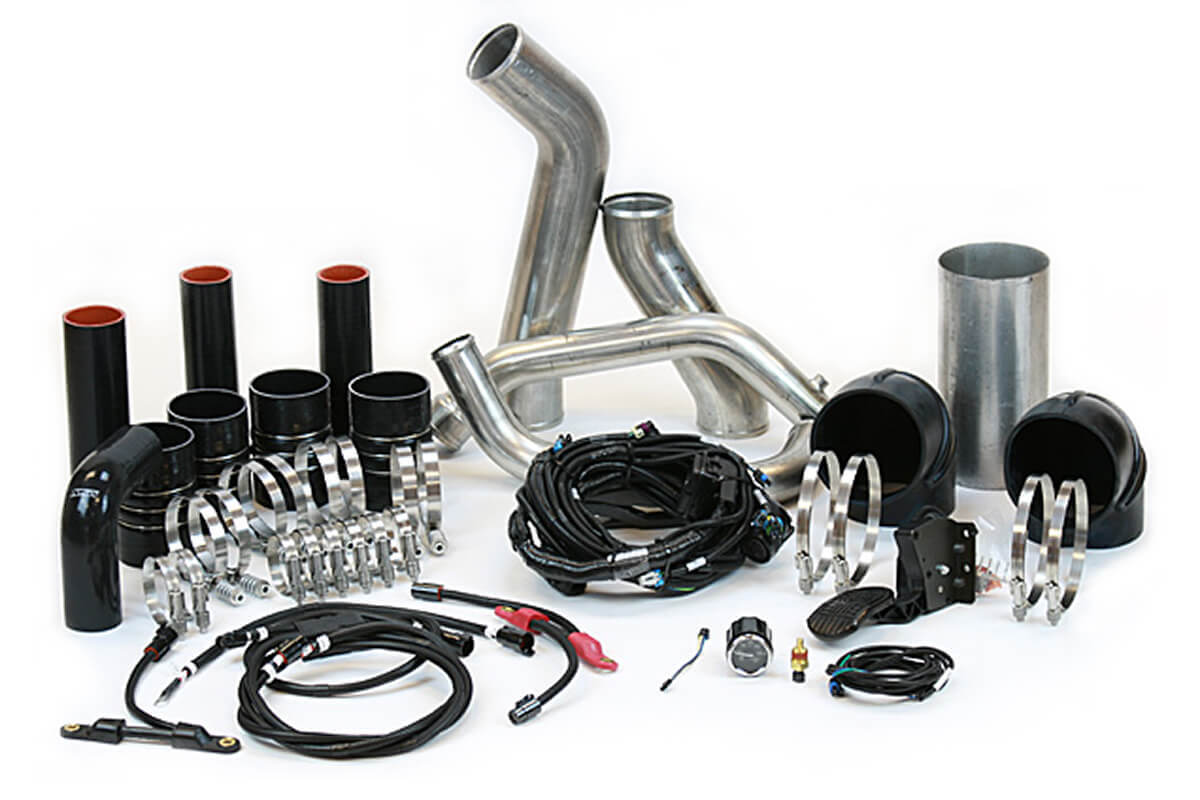
Engineered for a Clean, Reliable Conversion
A Cummins-to-CAT engine swap kit provides the essential components needed to replace a Cummins ISX (or similar) diesel engine with a Caterpillar powerplant in a heavy-duty truck. These conversions are growing in popularity among truck owners and fleet operators who want Caterpillar's legendary durability, exceptional raw power, straightforward maintenance, and million-mile reliability.
A properly engineered Cummins-to-CAT swap is far more involved than simply dropping in a new engine. The two platforms differ significantly in mounting geometry, electronic architecture, cooling system layout, air intake design, exhaust routing, and ECM communication protocols. Our swap kits deliver the precise brackets, harnesses, piping adapters, and interface components required to achieve a clean, reliable, and OEM-level integration.
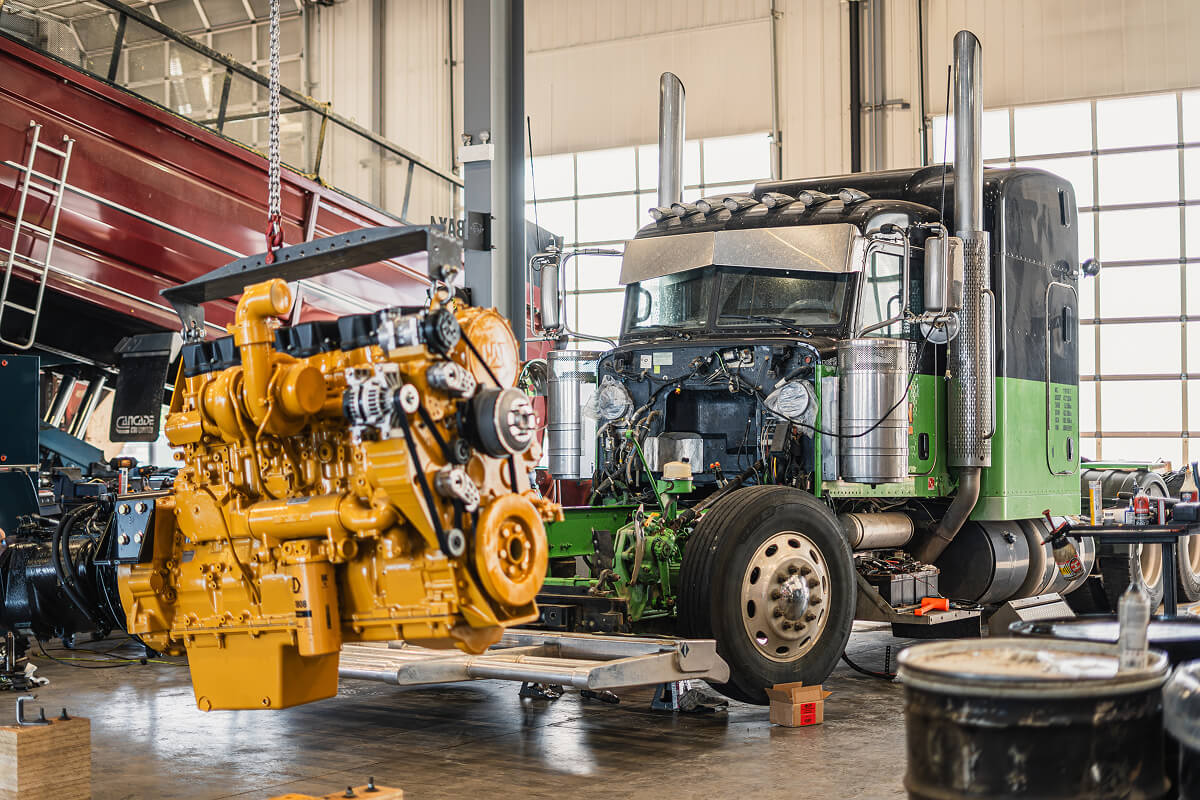
Why Convert from Cummins to Caterpillar?
Cummins is currently the only engine available across virtually every heavy-duty truck brand. The ISX powers the majority of Peterbilt, Kenworth, Freightliner, Western Star, and other Class 8 trucks in long-haul, regional, and vocational applications. However, a growing number of owners and fleets are choosing to convert from Cummins to Caterpillar for superior long-term durability and simpler serviceability.
Key Reasons for a Cummins to CAT Engine Swap
- Legendary durability with many CAT engines routinely exceeding 1,000,000 miles
- Outstanding raw power and strong heavy-haul performance
- Significantly easier maintenance and serviceability
- Excellent overall reliability and reduced downtime
- Broad aftermarket and rebuild support network
- Familiar CAT service infrastructure and widespread technician knowledge
- Stronger long-term cost of ownership in high-mileage applications
Caterpillar has built a long-standing reputation in vocational and heavy-haul trucking. When properly integrated, a CAT engine delivers the confidence that comes with a powerplant engineered to outlast and outperform the competition with fewer headaches.
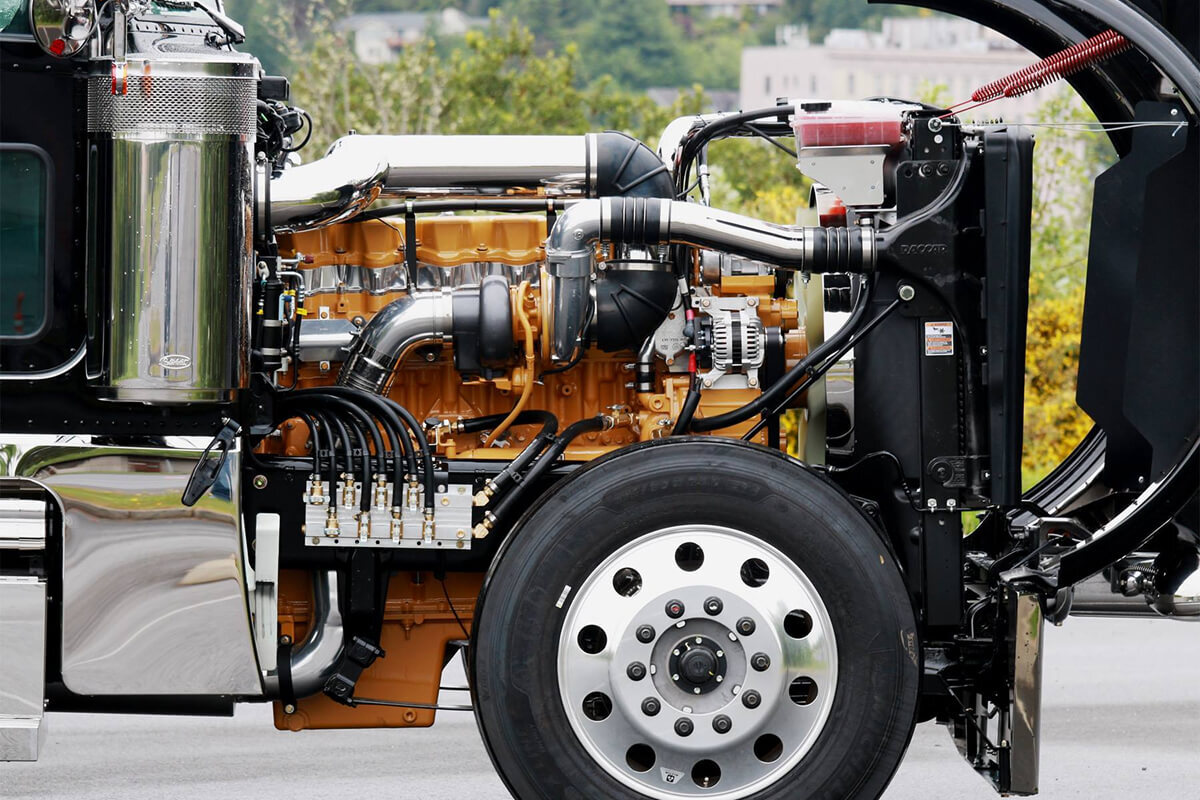
What Is Included in a Cummins-to-CAT Engine Swap Kit?
A Cummins-to-CAT engine swap kit includes the integration components needed to connect the new Caterpillar engine to the truck's existing chassis systems.
Because Cummins and Caterpillar engines use different wiring architectures, mounting footprints, and cooling configurations, a successful swap requires more than just bolting in a new engine.
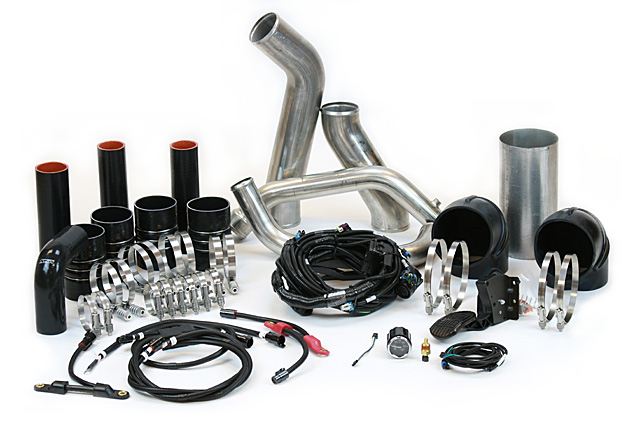
Our kits are engineered as complete, direct-fit solutions tailored to your specific truck. Typical components include:
- Engine wiring harness and power distribution for ECM-to-chassis communication
- Engine mount brackets and alignment hardware specific to the chassis and CAT engine family
- Cooling system adapters, including CAC and radiator tubes, and exhaust routing solutions
- Air intake adapter piping to accommodate differences in turbo inlet and outlet diameters
- Configuring the engine to reuse as many components as possible (a/c, fan, etc.)
- ECM programming for specific chassis electronics
Every truck is unique, so the exact components needed for a Cummins to CAT swap vary significantly between models. For example, the parts required for a Peterbilt 389 are different from those needed for a Peterbilt 386 or a Kenworth W900.
Our kits are fully customized based on your specific chassis model, chassis electronics, Cummins ISX generation, and the Caterpillar engine family you've chosen. This ensures you receive a complete, direct-fit solution tailored to your truck instead of a generic "one-size-fits-all" kit.
Compatibility: What You Need to Verify
Before starting a Cummins to CAT engine swap, it's essential to verify several key compatibility factors specific to your truck. Taking the time to confirm these details upfront prevents costly surprises and ensures you get the correct kit the first time.
1. Chassis Configuration
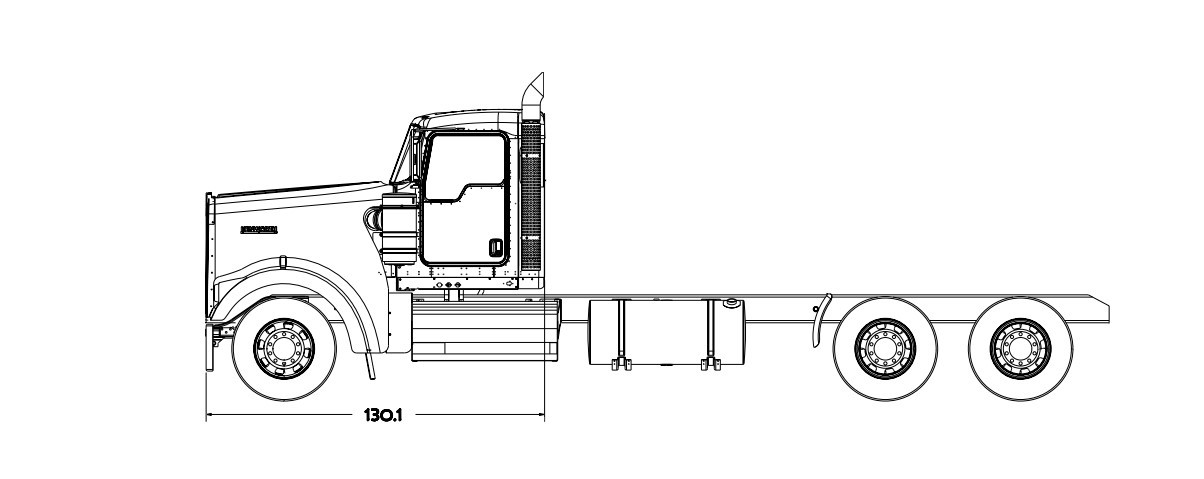
One of the most important early checks is your truck's hood configuration. Measure the Bumper to Back of Cab (BBC) dimension to determine whether you have a short hood or long hood truck.
Hood length is critical because it largely determines whether a Caterpillar engine will physically fit. Trucks with less than 118" BBC are generally too small for a big block CAT engine (such as a C15 or C16) and require significant chassis modifications.
A short hood truck will require a different combination of mounts and adapters than a long hood model to achieve proper fitment and clearance with the Caterpillar engine.
2. Transmission Pairing
Verify which transmission you plan to keep behind the Caterpillar engine. Most common transmissions (Eaton manuals, Ultrashift/Autoshift, and Allison automatics) can be retained, but they require the correct interface components.
If you are also swapping the transmission at the same time, additional parts are typically needed. Installing an automated transmission will require the compatible electronic interface harness and proper TCM programming. Converting from an automatic to a manual transmission requires clutch linkage and shift lever kits to ensure proper operation and shift mechanism.
3. Electronics and ECM Integration
You should also check whether your truck has an existing Engine Oil Temperature Gauge, as it is not compatible with CAT ADEM2 and ADEM2000 engines and will not function after the swap. Finally, the CAT ECM must be programmed and configured so the engine and cab electronics can properly exchange messages for correct gauge operation, switch functionality, and overall drivability.
4. Cooling, Intake & Exhaust Adaptation
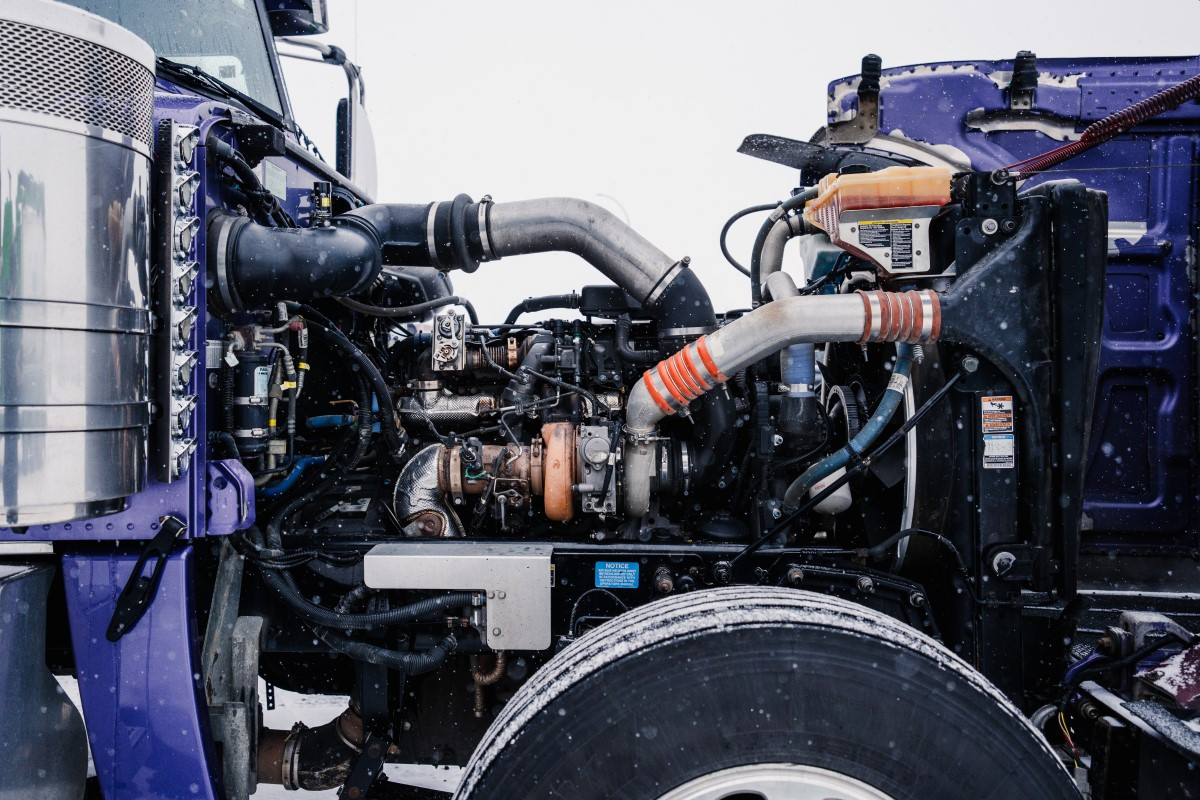
While the existing radiator and charge air cooler (CAC) package should be reused, the factory routing and connections were designed specifically for the Cummins engine.
The factory water and CAC tubes are laid out for the Cummins engine and do not line up with the CAT engine's port locations for optimal flow.
Confirm the air intake system. The original Cummins intake piping is often neither the correct diameter nor properly routed for the Caterpillar turbo inlet. The exhaust system requires similar verification, as it usually needs modifications for proper clearance, routing, and backpressure to match the new CAT engine.
5. Engine Upfit
Unless the replacement CAT engine came out of the same year, make, and model of truck, an engine upfit will be required. Common upfit needs include belt drive conversion (V-belt vs. serpentine), fan hub compatibility, alternator and A/C compressor mounting, intake manifold style, turbo outlet elbow orientation, and oil pan configuration.
A successful Cummins to CAT engine swap starts with thorough upfront verification of your truck's chassis configuration. Key areas to check include hood length (BBC), transmission type, chassis electronics and ECM integration, cooling/intake/exhaust routing, and engine upfit components such as A/C lines, fan hub, and belt drive configuration.
Installation Considerations for a Successful Swap
A properly selected Cummins-to-CAT engine swap kit reduces installation complexity, but planning still matters. These are the areas where cross-brand swaps between Cummins and Caterpillar require the most attention.
Electrical Integration
During installation, focus on clean, secure wiring practices. Proper harness routing, grounding points, and connector integrity help prevent chafing, shorts, and intermittent faults. Pay special attention to the engine-to-cab harness, throttle position sensor connections, and fused ECM power circuits.
Engine Mounting
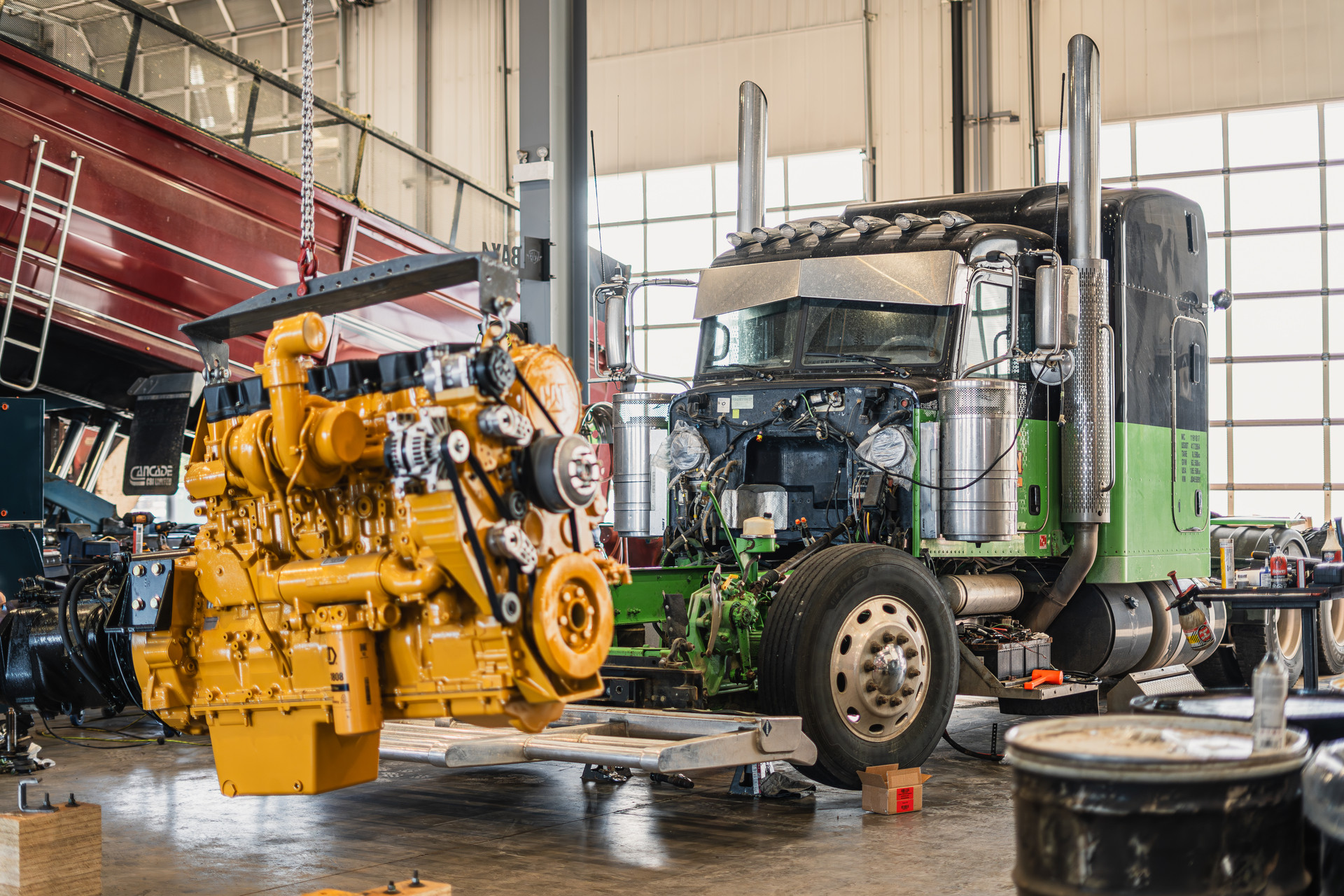
Proper engine placement in the frame is one of the most important steps. The goal is to position the Caterpillar engine so the transmission can remain in its original location whenever possible. This preserves OEM driveline lengths, maintains correct shift linkage and clutch geometry, and greatly simplifies the rest of the installation.
To achieve the correct height and alignment, we strongly recommend reusing the truck's original front trunnion brackets and saddle when possible. Because the donor CAT engine may have come from a Western Star, Freightliner, International, or other brand, it is critical to use the correct front engine mount bracket from a Peterbilt or Kenworth truck. This ensures proper front height and allows you to reuse the existing rear frame mounts once you have the correct corresponding flywheel housing brackets.
Once the engine is correctly positioned, complete the installation with the appropriate front and rear engine mount bushings (as needed) for a solid, vibration-free setup.
Cooling, Intake & Exhaust Routing
Even with the correct adaptation parts, careful routing during the build makes a big difference. All hoses, charge air tubes, intake piping, and exhaust components must have adequate clearance, secure clamping, and smooth bends to avoid restrictions, rubbing, or heat-related issues. Turbo inlet and outlet size differences between the Cummins and CAT engine require particular attention to ensure proper intake and exhaust flow.
ECM Programming and Calibration
Once the engine is sat in the frame rails, the ECM must be properly configured before the engine and cab electronics can communicate with each other. This is typically done using CAT ET software.
Even if the replacement CAT engine is a running takeout, the ECM still needs to be configured for the specific chassis it is being installed into. Bench testing the ECM before installation can save significant time and troubleshooting later.
This critical step ensures accurate gauge readings, correct transmission communication, speedometer functionality, and full engine protection parameters.
Our Cummins-to-CAT swap kits are engineered as direct-fit solutions, so no specialized shop equipment or advanced tooling is required. This makes a professional-quality engine swap realistic for both experienced DIY builders and truck shops.
Having access to CAT ET software is highly recommended for final ECM programming. With good planning and careful execution, these swaps can be completed successfully whether you're working in a professional shop or handling the project yourself.
Performance Outcomes After Conversion
When installed correctly, a Cummins-to-CAT engine swap delivers the long-term reliability and performance that have made Caterpillar engines a favorite among serious truck owners and fleets.
- Legendary durability with many CAT engines routinely exceeding 1,000,000 miles
- Strong, consistent raw power and excellent heavy-haul capability
- Simplified and straightforward maintenance
- Outstanding overall reliability with reduced downtime
- Excellent access to parts and a deep aftermarket rebuild network
- Familiar CAT service infrastructure and widespread technician knowledge
- Better long-term cost of ownership due to extended engine life and easier service protocol
The exact performance gains will vary depending on the specific CAT engine model chosen and tuning configuration, but the most common feedback we hear is dramatically increased confidence in the engine's longevity and serviceability. Operators often report that after switching from a Cummins to a Caterpillar engine, the truck simply feels stronger, more dependable, and easier to maintain over the long haul.
Start Planning Your Cummins-to-CAT Engine Swap
Converting from Cummins power to Caterpillar performance requires precision components and proper planning. Whether you're a professional shop or a capable DIY builder, our goal is to make your CAT swap as straightforward and reliable as possible.
Contact us today with the specific details of your Cummins-to-CAT engine swap. We'll verify compatibility and help you select the right components for your build.
Frequently Asked Questions
What trucks can use a Cummins-to-CAT engine swap kit?
Most Peterbilt, Kenworth, Freightliner, Western Star, and other heavy-duty platforms originally equipped with a Cummins ISX (or similar) engine are potential candidates for a Cummins to CAT conversion. Cummins engines are the most common powerplants in modern Class 8 trucks, so compatibility is broad. However, successful swaps depend on verifying key details such as hood configuration (BBC), chassis electronics generation, transmission type, and the specific Caterpillar engine family you plan to install. Our kits are designed to work across a wide range of these models when the proper components are selected for your exact truck.
How long does a Cummins-to-CAT engine swap take?
Installation time depends on your experience level and how complete the kit is, but our customers see very consistent results. When using our full direct-fit Cummins to CAT swap kit with all interface components included, most first-time builders complete the conversion in approximately 60 hours. Because we've eliminated custom fabrication and modifications, the process becomes much more straightforward — install the provided parts, and when the box is empty, simply move on to the next stage. Once familiar with the conversion process, each truck's installation time gets faster and faster.
Do I need a new transmission for a CAT conversion?
No — you can usually keep your existing transmission. Most transmissions commonly paired with Cummins ISX engines work well with a Caterpillar swap when using the correct interface components. This includes Eaton Fuller manual transmissions, Ultrashift and Autoshift automated manuals, Allison GEN4 and later automatics, as well as many other popular models.
Our kits provide the necessary harnesses, adapters, and communication solutions so the CAT engine can properly work with your existing transmission. In the majority of cases, the transmission can stay in its original location, preserving your driveline lengths, shift linkage, and clutch setup. If you have a less common or older transmission model, give us a call. We'll verify compatibility and let you know exactly what (if anything) is needed.
Can I perform a Cummins-to-CAT engine swap myself?
Yes — you can absolutely perform the Cummins to CAT engine swap yourself. Our direct-fit kits are engineered to eliminate the custom fabrication and complex engineering work that typically makes cross-brand swaps intimidating. With all the necessary harnesses, mounting brackets, cooling adapters, intake and exhaust routing components, and engine upfit pieces included, the process becomes much more straightforward for mechanically inclined builders.
The most challenging parts are usually the electrical integration and final ECM programming. As long as you're comfortable with diesel mechanics, follow the provided instructions, and have access to CAT ET software, most experienced DIYers can complete the job in approximately 60 hours.
Why Choose Kustom Truck Parts for Your Swap Components?
Kustom Truck Parts pioneered the industry of Cummins-to-CAT engine conversions. We didn't just start selling parts for these swaps — we created the category and built the first complete, reliable solutions. While other companies may offer individual components, we deliver complete, direct-fit swap kits that let you install a Caterpillar engine with confidence. No custom fabrication. No endless trial and error. Just a well-engineered, one-stop solution.
What sets us apart:
- Over 60 years of combined in-house experience in heavy-duty truck conversions
- True direct-fit components engineered specifically for Cummins to CAT swaps
- Full-system approach covering engine mounting, electronics, cooling, intake, exhaust, and engine upfit integration
- Fitment verification to make sure you get the right kit the first time
- Dedicated Technical Support Department for any issue after the sale
Our goal is simple: Make your Cummins to CAT conversion as straightforward, reliable, and successful as possible — whether you're a professional shop or a capable DIY builder.