The Benefits of Engine Conversion for Heavy-Duty Trucks
Posted by Kustom Truck Parts on 22nd Sep 2026
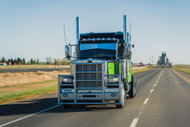
Heavy-Duty Truck Engine Conversion: The Cost and Performance Case for Repowering Instead of Replacing
A truck with a tired or problematic engine and a solid chassis leaves most owners with three options:
- Buy a new truck ($150,000–$200,000+ before options, taxes, and financing).
- Buy a used truck and inherit whatever service history (or lack of it) comes with it.
- Convert/repower the truck they already know — keeping the frame, cab, and drivetrain they’ve already paid for and trust.
The used-truck route is popular for a reason: lower upfront cost and no new-truck note. The risk is real, though. You’re betting on someone else’s maintenance records, rebuild quality, and remaining component life. Many owners who go this route find themselves back in the same situation 6–18 months later.
That leaves the third path — a heavy-duty truck engine conversion (also called a repower or swap). Done correctly, it keeps the chassis and drivetrain you already understand while resetting the powerplant. At Kustom Truck Parts we’ve supplied the conversion-specific hardware (electronics, piping, brackets, and upfit) for these swaps on Peterbilt, Kenworth, Freightliner, and Western Star platforms for years. The math and the long-term ownership experience frequently favor keeping the truck you know.
This guide walks through the actual cost comparison, the performance and reliability realities, and how to decide whether your truck is a good conversion candidate.
Why Owners Compare Conversion to Replacement (and Buying Used)
Nobody wakes up wanting to research heavy-duty truck engine conversion. The conversation usually starts when one of three things happens:
- The current engine has a major failure (bearing, block, catastrophic wear).
- The truck is still mechanically sound but the powerplant has become unreliable, hard to work on, or expensive to keep compliant.
- Emissions rules (especially in places like California) force a change the owner would rather avoid.
At that point most owners are looking at three real paths:
- Buy new — High capital cost, new payment, and the unknown of a completely different truck.
- Buy used — Lower upfront cost, but you’re inheriting someone else’s maintenance history, rebuild quality, and remaining component life. Many owners who go this route end up in the same situation again within a year or two.
- Convert / repower the truck they already own — Keep the frame, cab, suspension, and drivetrain they know and trust, and only replace the engine (and the supporting conversion hardware).
The decision almost always comes down to one question: is the rest of the truck worth keeping? Frame rails, cabs, and drivetrains routinely outlast the engines bolted in front of them. If the chassis is straight, the cab is solid, and the drivetrain is still serviceable, replacing only the powerplant is frequently the lower-risk and lower-cost way back to productive miles.
A common assumption is that every conversion moves to a newer, emissions-compliant engine. In practice, conversions go in both directions. Some owners need or prefer a current-generation platform. Others choose earlier-generation engines because of differences in diagnostics, serviceability, and long-term ownership characteristics. Earlier platforms are generally simpler to work on — many owners can diagnose and repair them themselves or with a trusted independent shop, parts remain widely available, and these engines continue to deliver long service lives when properly maintained. Newer emissions-controlled engines can be powerful and efficient when everything is working, but they often involve greater dealer dependency for software and diagnostics, and real-world longevity and downtime experiences vary more widely from one truck to the next.
Shop Reality: We talk to owners every week who assume a bad or problematic engine means the whole truck is done. In most cases it means one system needs attention. The rest of the vehicle is still doing its job — and the owner already knows its history.
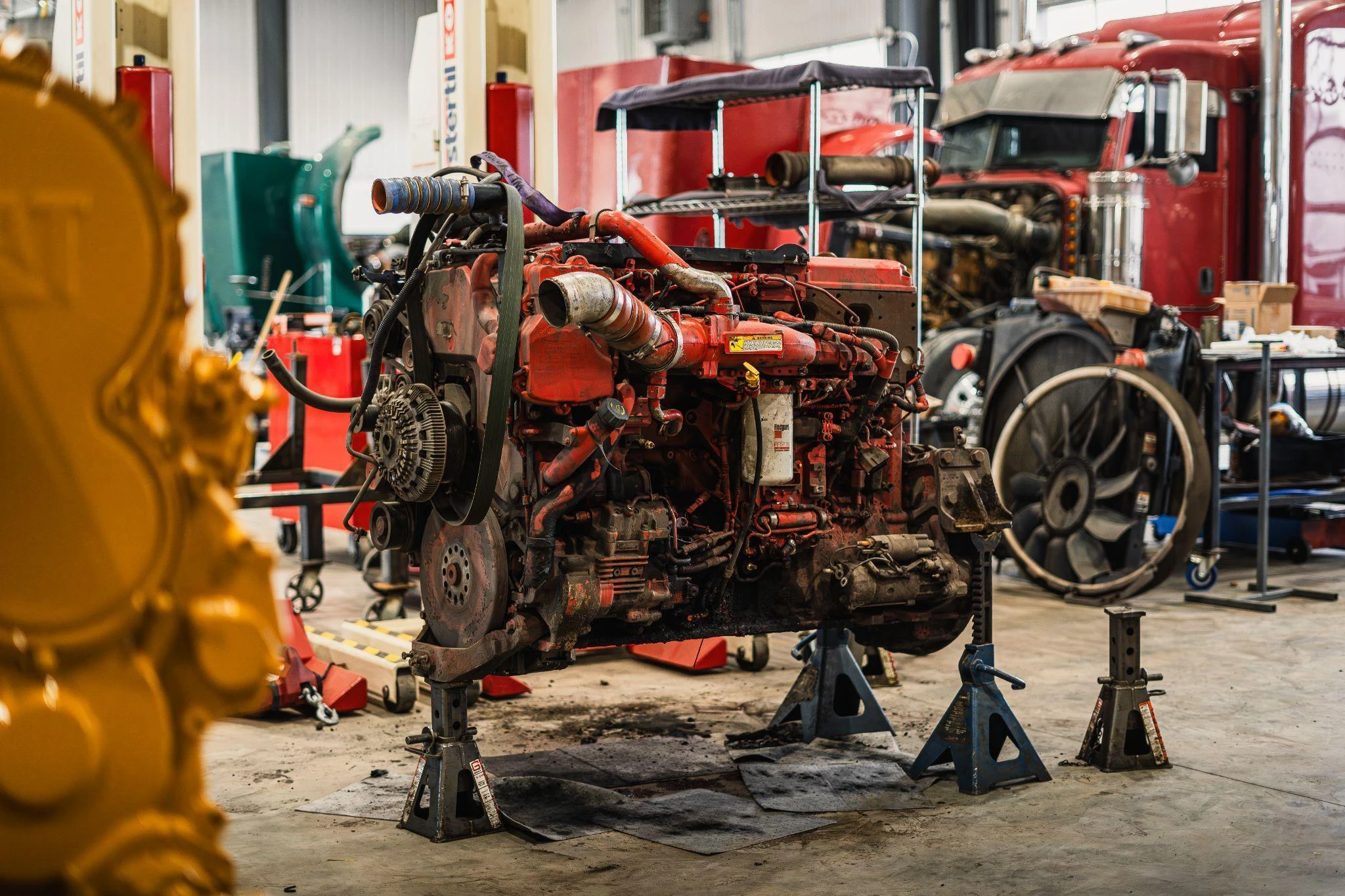
The Real Cost Comparison
Here’s where the numbers (and the risk) start to matter. A new Class 8 tractor routinely lands well into six figures before options, taxes, and financing. That number moves around by brand and spec — a Freightliner is typically less expensive than a comparably equipped Peterbilt or Kenworth — but the end result is the same: a large new payment, new insurance, and a truck the driver has to learn from scratch.
Buying a used truck is the most common alternative for owners who want to avoid that note. Prices can run anywhere from the low $20,000s–$30,000s up to six figures depending on year, make, model, mileage, and whether the drivetrain has been rebuilt. Upfront cost is lower, but the risk sits in the unknown: service history, quality of any previous work, remaining life on the engine and major components, and whether the truck will still be earning money a year from now. Many owners who take this route end up right back where they started after a few months or a year.
A heavy-duty truck engine conversion sits between those two options. You keep the chassis, cab, and drivetrain you already own and understand, and you replace only the powerplant plus the conversion-specific hardware required to make it work correctly.
On the parts side, a complete Kustom Truck Parts package covering all four critical areas — electronics interface, brackets, piping kits, and full engine upfit — typically runs $15,000 to just over $20,000. Labor for a well-prepared conversion that uses these direct-fit components is usually in the 60-hour range. At typical shop rates, that puts labor around $10,000–$12,000, for a combined parts-and-labor range of roughly $25,000–$35,000.
The largest variable is the engine itself:
- Some owners already have a usable motor waiting.
- Others source a good running takeout.
- Many choose a quality overhauled engine from a reputable builder.
- The highest-cost route is a factory remanufactured engine, which can run $50,000–$70,000 depending on make and model.
Add those pieces together, and a complete conversion using Kustom Truck conversion hardware commonly lands in the $50,000–$100,000 range out the door, with the engine choice driving most of the spread. That is still a fraction of a new truck for most buyers and, in many cases, competitive with or lower-risk than hunting for the “right” used truck.
The benefits still show up fastest on the balance sheet and in operational continuity:
- No new truck loan or lease payment
- No re-titling, re-permitting, or re-insuring a new VIN
- Existing driver familiarity with the cab, controls, and how the truck actually behaves
- You already know the service history of the frame, suspension, and drivetrain
- In many cases, a shorter path back to revenue-generating miles than waiting on a new build or sorting through used inventory
Key reality: The math only holds if the conversion-specific parts are correct the first time. Electronics, air and cooling piping, engine and frame brackets, and the final upfit all have to match the new engine and the existing chassis. Cutting corners here is the fastest way to turn a controlled project into expensive rework and extra downtime. We break those four categories down in detail in our Engine Conversion Basics guide.
One more cost factor that rarely shows up in a simple price comparison: long-term ownership. Many owners deliberately convert to proven pre-EGR / pre-DPF platforms because the real-world durability, parts availability, and ability to work on the truck with a trusted independent shop often produce lower total cost of ownership over the next 500,000–1,000,000+ miles than staying with (or moving to) a newer emissions-controlled engine.
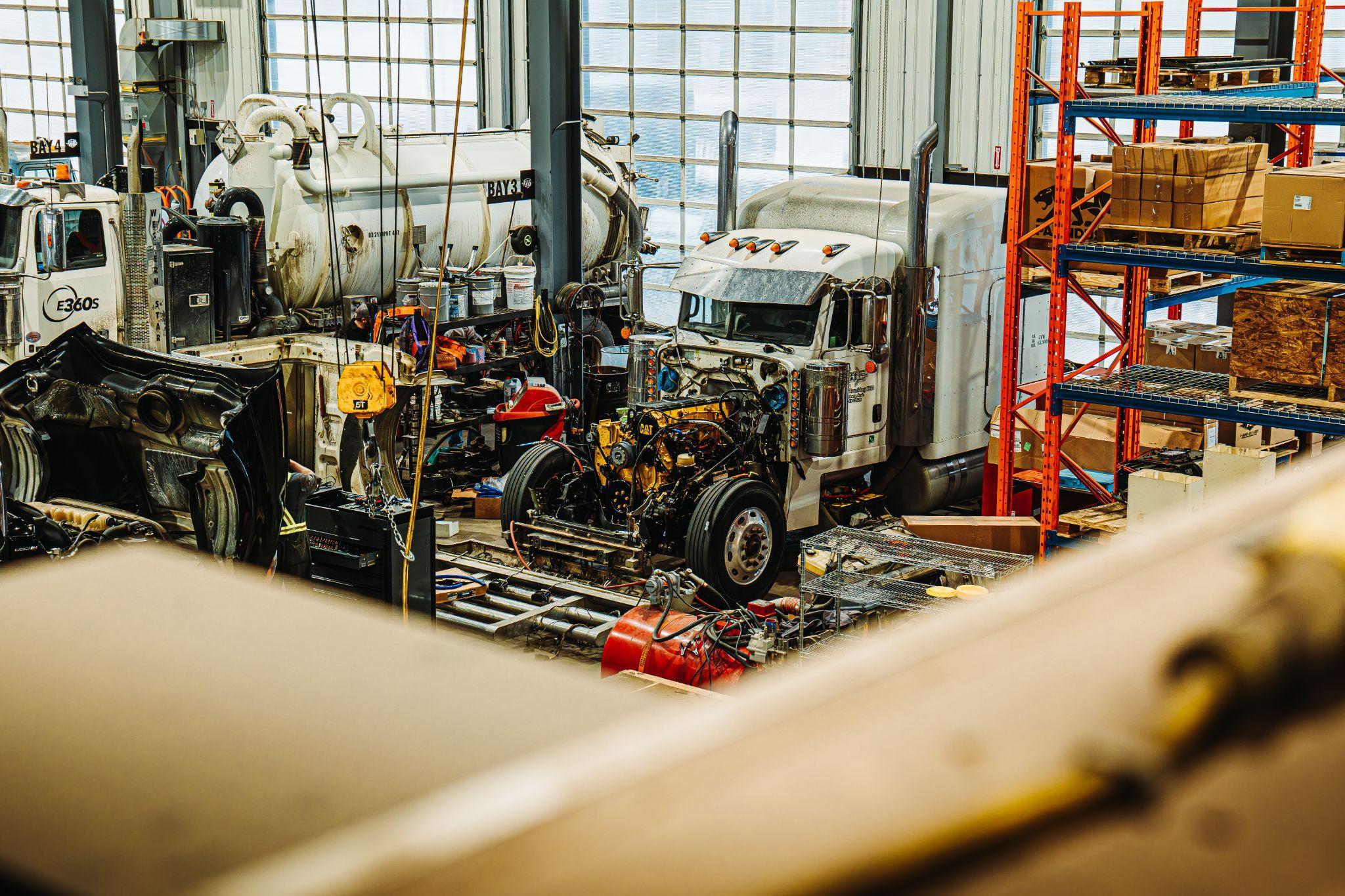
Performance Gains You Can Measure
Cost savings get owners to consider a conversion. What usually convinces them it was the right call is what happens after the truck is back at work: reliability, uptime, serviceability, and how the powerplant actually holds up over the long haul.
A conversion can move in either direction — toward a newer emissions-compliant platform or toward a proven earlier-generation engine. The measurable differences between those platforms show up in day-to-day ownership more than in brochure numbers.
- Power and torque. Both newer and earlier engine platforms are fully capable of delivering the horsepower and torque most applications require. The idea that a newer engine automatically produces more usable power is largely a myth. A conversion is an opportunity to right-size the engine to the actual work the truck does. The real gain is usually better delivery of the power the application needs, with the operating characteristics of the platform the owner chooses.
- Fuel economy. Fuel economy differences exist between platforms, but they are not automatic and they are not solely a function of engine technology or emissions equipment. Engine size matters. How the truck is driven matters more. A heavy right foot will erase the advantage of almost any power plant. Many owners see stable or improved real-world fuel numbers once the truck is set up correctly and driven with the same discipline they used before, regardless of which generation of engine is installed.
- Uptime and serviceability. This is where platform differences often become most visible. Newer emissions-controlled engines typically require dealer-level software, proprietary diagnostics, and specialized tools. A failed sensor or aftertreatment-related issue can turn into extended downtime while the truck waits for a dealership bay and the correct equipment. Earlier-generation platforms are generally simpler to diagnose and repair. Many owners can work on them themselves or take them to an independent shop they already trust. Parts support remains strong, with both the OEMs and quality independent rebuilders offering factory-reman or OEM-level components backed by warranty.
- Longevity. A properly driven and maintained earlier-generation engine is routinely capable of 1,000,000+ miles. Newer emissions-controlled engines have a more mixed real-world record — some reach high mileage, while others see major issues earlier, with many averaging in the 600,000-mile range. When an engine fails on a truck that still has payments attached, those payments do not pause. Revenue stops while the bills continue. Matching the engine platform to the owner’s maintenance approach and expected service life is therefore a meaningful part of the performance decision.
Shop Reality: We regularly see owner-operators and small fleets convert a solid chassis to a different engine platform and return to the same routes with fewer intermittent problems, faster repairs when something does need attention, and a powerplant that fits how they actually maintain and operate the truck. The chassis was never the problem. The engine (and how well it matched the owner’s needs) was.
The measurable gains from a well-executed conversion are therefore less about peak brochure numbers and more about the things that keep a truck earning: fewer surprise downtime events, simpler and faster repairs when they are needed, parts and knowledge that are readily available, and an engine platform whose real-world longevity and service characteristics line up with how the truck will be used. When those factors line up with a chassis the owner already knows and trusts, the performance case becomes clear.
Extending the Life of a Truck You Trust
Trucks are built to outlast a single engine. Frame rails, cabs, and sleepers routinely deliver 20+ years of service when they are maintained. Engines are the component most likely to need major attention well before the rest of the vehicle is ready to be retired.
A heavy-duty truck engine conversion lets an owner keep the truck they have already dialed in — the seat position, the mirrors, the cab layout the driver knows by feel — while resetting the clock on the powerplant. That continuity has real value. The owner already knows the service history of the frame, suspension, and drivetrain. There is no guessing about how the previous owner maintained it or what shortcuts might have been taken on a rebuild.
This advantage is even larger on specialty or vocational trucks. The cab, body, and mounted equipment often represent a major investment beyond the basic chassis. Buying a new or used replacement truck usually means re-mounting, re-wiring, or replacing that equipment. Converting the engine leaves everything exactly where it is and already working.
The same logic applies when comparing conversion to buying a used truck. A used truck may look right on paper, but the buyer inherits whatever history (or lack of history) comes with it. Keeping the truck you already own and simply addressing the engine removes that uncertainty.
Pro Tip: Before committing to a conversion, get an honest inspection of the frame, cab, and drivetrain. A conversion only pays off if the parts you are keeping are actually worth keeping. Straight frame rails, solid cab, windows, door seals and a sound drivetrain are what make the economics work.
When the chassis checks out, a conversion is often the most direct way to extend the productive life of a truck the owner already trusts — without taking on a new payment or the unknowns that come with someone else’s used equipment.
What Actually Goes Into the Swap
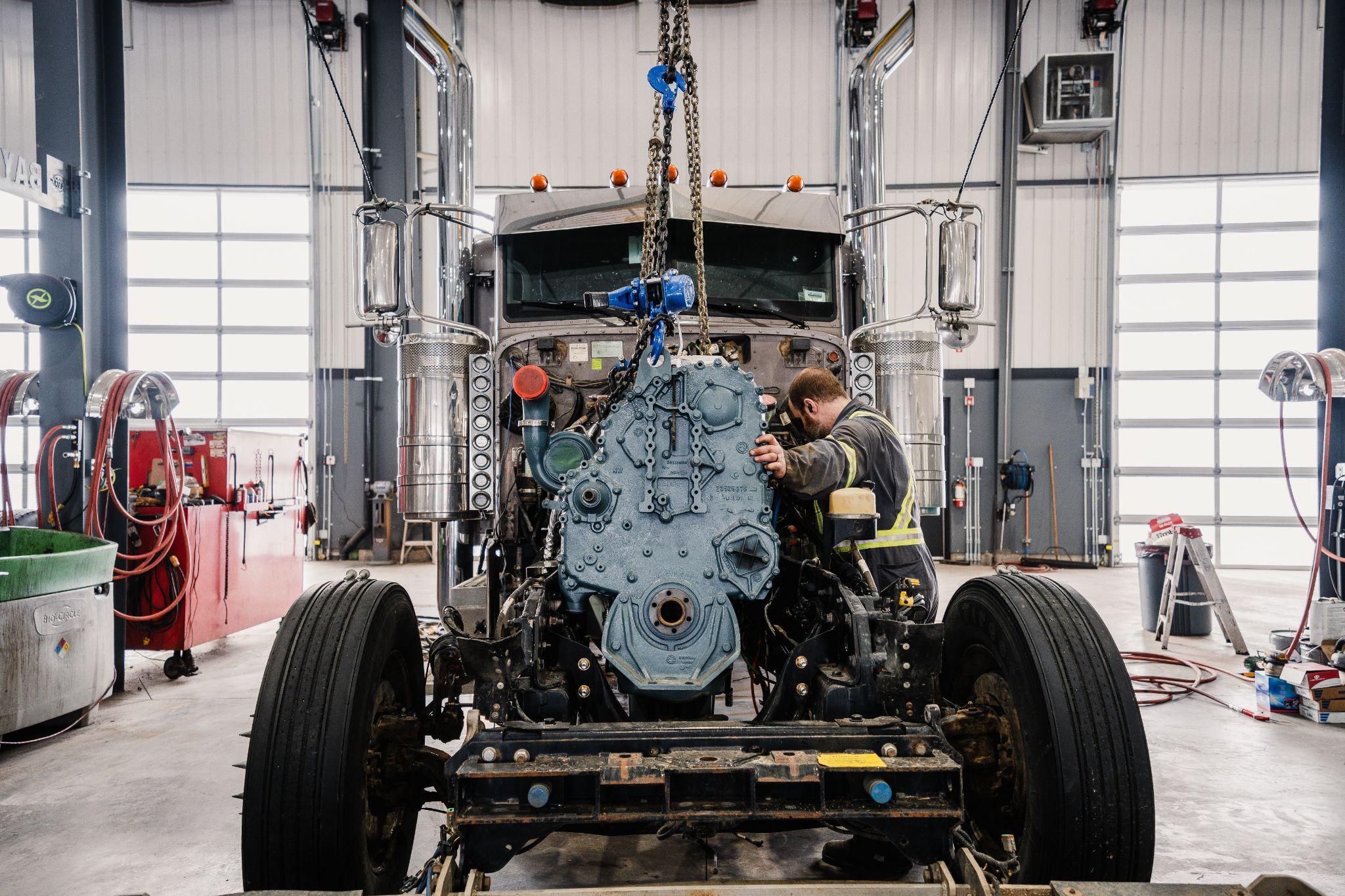
A heavy-duty truck engine conversion is more than unbolting one engine and bolting in another. The replacement engine has to communicate with the existing chassis electronics, breathe through the correct piping, sit on the correct mounts, and run the right accessory setup for the truck it is going into. Skip or approximate any of these and the project quickly turns into rework, downtime, and lost savings.
Four categories of conversion-specific hardware determine whether the swap is clean or costly:
- Electronics: The new engine needs a compatible engine harness, throttle pedal and/or TPS and power distribution interface so it can talk to the dash, transmission, and cab systems. Without the correct electronics, owners end up with blank gauges, fault codes, or systems that simply do not function.
- Air and cooling: Turbo inlet and outlet diameters, charge-air routing, and radiator cooling connections vary by engine family. The piping and related components have to match the engine that is being installed, not the one that came out.
- Mounting: Engine and frame brackets are chassis- and engine-specific. incorrect geometry creates fan-to-shroud contact, firewall clearance problems, or driveline alignment issues that show up after the truck is back in service.
- Upfit: Belt drive style, accessory location, and the supporting engine upfit components complete the installation so the engine actually functions as if it belonged in that chassis from the start.
These four areas are where most of the difference between a controlled project and an expensive one is made. When the electronics, piping, brackets, and upfit are correct the first time, labor stays predictable and the truck returns to work without a string of follow-up fixes. When they are not, the cost advantage of the conversion erodes quickly.
Repair or Convert
Not every truck is a conversion candidate, and not every situation calls for the same solution. Here is a practical way to sort the decision:
| Situation | Better Fit |
|---|---|
| Engine is the clear bottleneck (major failure, chronic reliability issues, or a platform that no longer fits how the truck is maintained and operated); chassis, cab, and drivetrain are sound | Engine Conversion |
| Frame, cab, or drivetrain has major structural or safety issues | New or carefully inspected used truck |
| Owner wants to avoid a large new-truck payment and already knows the history of the current chassis | Engine Conversion |
| Truck is specialty or vocational and the body/equipment represents a major additional investment | Engine Conversion (keeps the existing setup intact) |
A few additional filters help narrow it further:
- If the chassis is straight, the cab is solid, and the drivetrain is still serviceable, converting the engine is usually the lower-risk path back to productive miles.
- If the rest of the truck is questionable, putting a good engine into a weak chassis only delays the larger decision.
Buying used can look attractive on price, but it transfers the unknown service history and remaining component life to the new owner. Conversion keeps the history you already understand.
Bottom line: When the chassis checks out and the current engine is what is holding the truck back — whether through failure, ongoing reliability problems, or a mismatch with how the owner needs to maintain and operate it — a conversion is often the fastest way back to full productivity without taking on new-truck debt or the uncertainties that come with someone else’s used equipment.
Final Word: Convert Smart, Keep Hauling
A heavy-duty truck engine conversion is not a shortcut. It is a deliberate decision to keep the chassis, cab, and drivetrain you already know and trust while addressing the engine that is holding the truck back.
When the frame, mounts, and drivetrain check out, conversion frequently delivers the best combination of cost control, known history, and return to productive work — without a new-truck payment or the uncertainties that come with buying someone else’s used equipment. The difference between a clean project and an expensive one almost always comes down to the conversion-specific hardware: electronics, piping, brackets, and upfit. Get those right the first time and the truck returns to work as a coherent, reliable unit. Cut corners there and the savings disappear into rework and downtime.
At Kustom Truck Parts we stock the conversion-specific hardware for these swaps on Peterbilt, Kenworth, Freightliner, and Western Star platforms. No universal junk. No “close enough.” Just the parts required to do the job correctly the first time.
Mon–Fri 7AM–4PM PST | Speak with a repower specialist
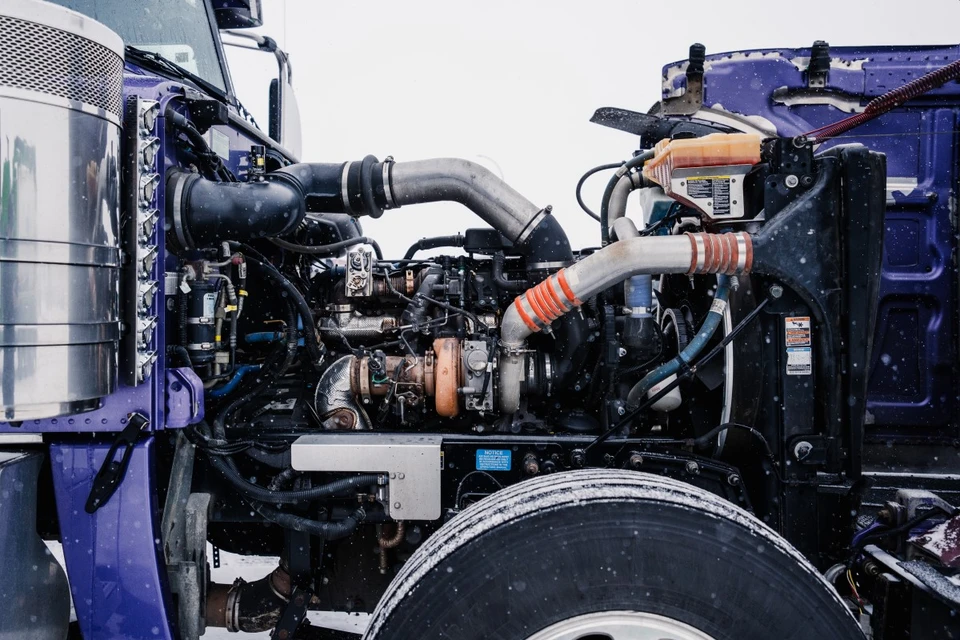
At Kustom Truck Parts, we support a lot of engine conversions in Peterbilt and Kenworth trucks. Since 2010 Paccar has offered essentially two different brands of engine in their trucks: a Cummins or a Paccar. Depending on which of the two different engines your truck started with, the conversion process is starkly different.
Read More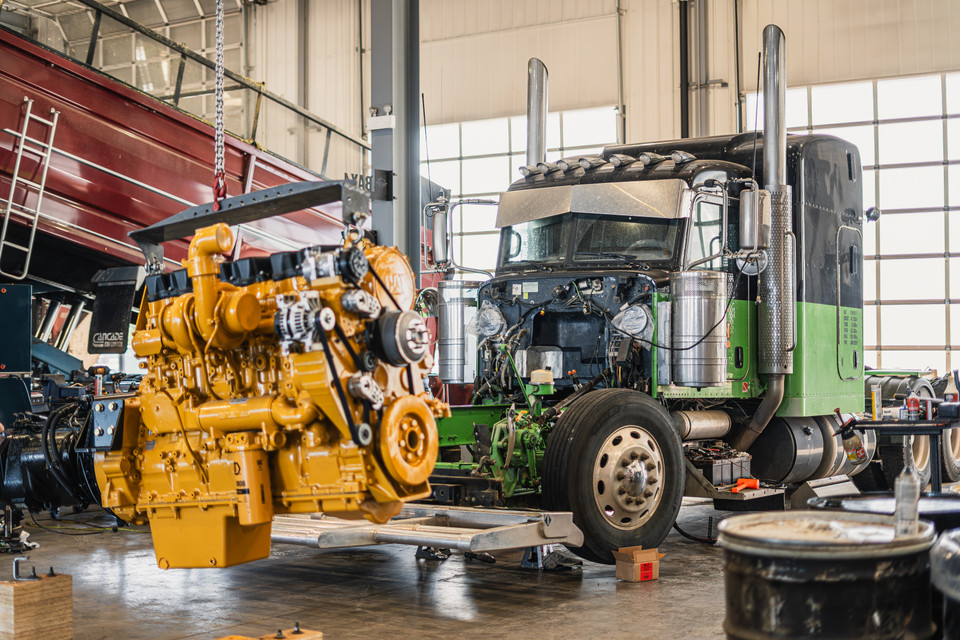
Engine swaps in heavy-duty trucks are the ultimate power move—whether you're repowering a fleet rig, restoring a legacy hauler, or upgrading for better fuel economy and emissions compliance. But success isn't about horsepower alone.
Read More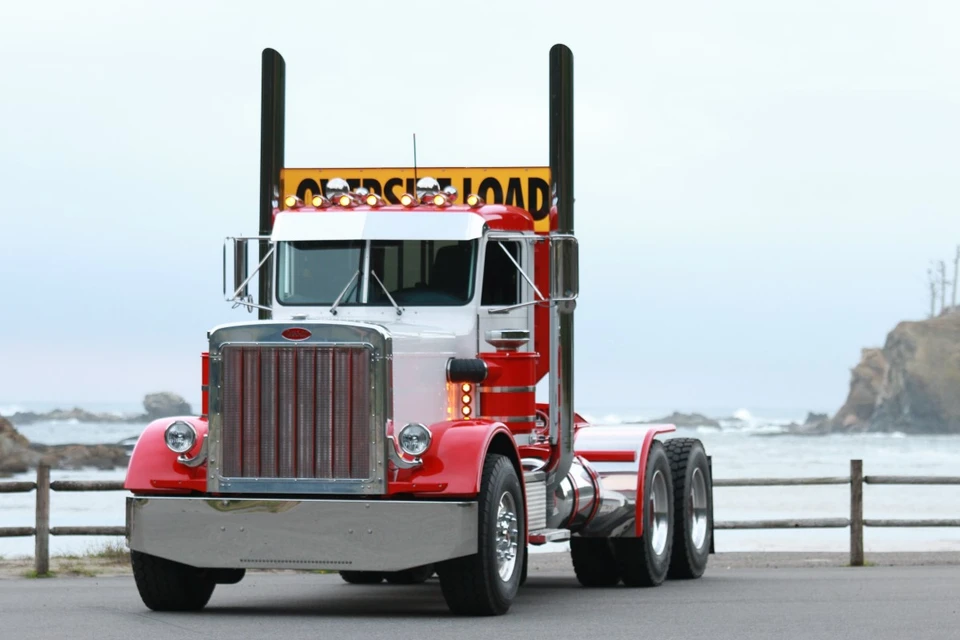
Drivers, owners, and operators—if you're knee-deep in Peterbilt or Kenworth builds and repowers, you've probably bumped into the term "NAMUX" more than once.
Read More